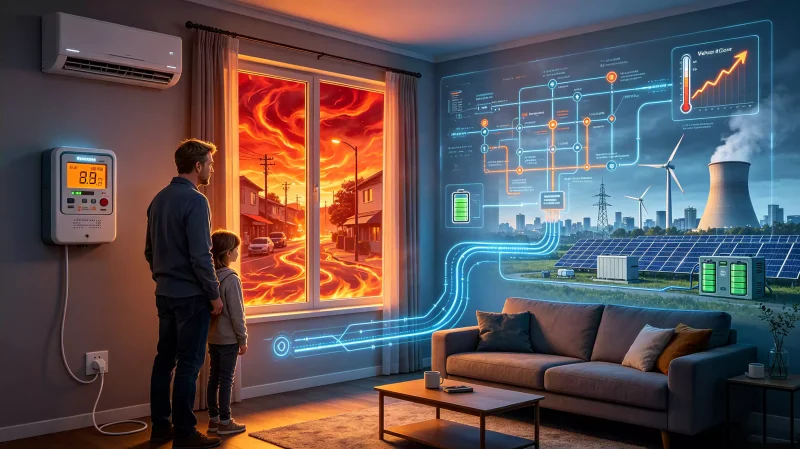
The energy transition itself is not the culprit behind skyrocketing electricity prices. The real root causes lie in underinvestment in infrastructure and persistent grid bottlenecks. Severe heatwaves continue to grip Europe. For local households, being unable to run an air conditioner despite owning one may be even more agonizing than failing to purchase a unit in the first place.
Surplus Power by Day, Unaffordable Rates at Night
Official data shows France recorded nearly 30% more fatalities between June 22 and 28 compared with the previous week, pushing excess deaths above 2,000.
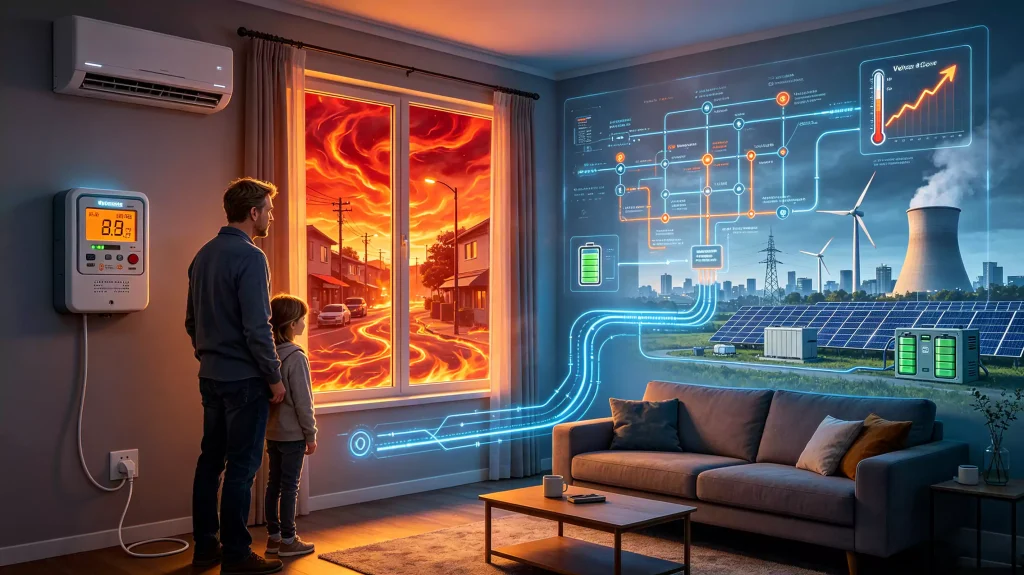
A regional climate monitoring body affiliated with the World Meteorological Organization forecasts that heatwaves will expand across most of Western, Central and Southern Europe in the two weeks from June 29 to July 12. Temperatures are projected to stand 3°C to 10°C above the seasonal weekly average, with daily highs exceeding 35°C in numerous regions.
While social media is flooded with discussions over residents scrambling to buy air conditioners, European families face a far greater worry: an overstretched power grid crippled by surging electricity tariffs and woefully insufficient energy storage.
Solar photovoltaic power dominates European electricity generation at midday, yet excess daytime power often cannot be stored effectively. Once evening peak demand hits, energy reserves run dry, forcing grid operators to rely on costly gas-fired power plants to fill the gap.
Energy news outlet Montelnews reports that Germany and France have frequently seen negative power prices during peak solar generation hours in recent weeks, with rates falling close to -100 euros per megawatt-hour between 12:00 and 15:00. By 20:00, however, prices soar above 300 euros per megawatt-hour.
Amid the latest heatwave, DutchNews noted dynamic electricity tariffs for Dutch households spiked to 1.2 euros per kilowatt-hour (roughly 9.3 Chinese yuan), four times the normal evening summer rate. The Brussels Times added that Belgium’s spot electricity prices once hit 1.04 euros per kilowatt-hour (around 8 yuan), marking the highest level since 2020.
Europe’s power crunch is not defined by a persistent overall shortage of electricity, but rather systemic instability and structural contradictions within its energy network.
Most European power grids were built between the 1960s and 1980s, engineered to run on fossil fuel power plants and ill-suited to handle the volatile output of distributed renewable energy today.
On April 28, 2025, a massive blackout hit Spain, Portugal and parts of southern France, ranking among Europe’s worst power outages in recent years. Communications collapsed across swathes of Spain, trains halted en masse, and traffic signals failed, disrupting more than 50 million people across multiple countries.
A year-long post-incident investigation later concluded the outage stemmed from cascading system failures, with Europe’s aggressive push for energy transition listed as a contributing factor.
High shares of renewable power generation amplify grid volatility risks. A report by energy think tank Ember identifies 2025 as a turning point for the EU’s power mix: combined wind and solar output accounted for 30.1% of electricity supply, surpassing fossil fuels for the first time, while all renewable sources together delivered 47.7% of power.
Extreme heat cripples nearly every form of renewable generation across Europe. Nuclear plants reliant on cooling water, alongside hydro, wind and solar facilities that depend on favorable weather conditions, all suffer severe capacity cuts, exacerbating the imbalance between power supply and demand.
Lagging Rollout of Energy Storage Infrastructure
Solutions to resolve supply-demand mismatches do exist. Energy storage is a critical tool for smoothing peak-valley power gaps and mitigating shocks from extreme weather, yet Europe’s current storage capacity can only offset 1–2 hours of power fluctuations.
The bloc has long recognized this vulnerability. Per European solar industry body SolarPower Europe, the European Commission set a target years ago to reach roughly 200 gigawatt-hours of energy storage capacity by 2030.
Antonio Arruebo, analyst at SolarPower Europe, stated the EU’s installed storage capacity neared 80 gigawatt-hours by the end of 2024, a tenfold increase within four years. Even so, Arruebo estimates capacity must expand another tenfold to approximately 780 gigawatt-hours by 2030 to meet demand—far exceeding the European Commission’s original target.
Juhi Dion Sud, lead of Europe’s battery storage platform, stressed that energy storage is no longer an optional add-on for Europe’s energy transition, but an absolute necessity.
A recent podcast hosted by the Kleinman Center for Energy Policy at the University of Pennsylvania dedicated an episode to global electricity pricing challenges. Panelists argued that the energy transition itself is not to blame for rising power costs; the core issues are delayed infrastructure investment and grid bottlenecks.
China has delivered tangible, scalable solutions to this global challenge, centered on unified national energy planning. Its integrated system pairs ultra-high voltage power transmission lines with coordinated development of renewables and energy storage, leveraging diversified power supplies to neutralize volatility threats to grid stability.
By the end of 2025, China’s operational new energy storage installations reached 136 gigawatts / 351 gigawatt-hours, a more than 40-fold jump compared with the end of the 13th Five-Year Plan period, representing transformative growth.
Chinese authorities have laid out clear medium-term development targets through the Special Action Plan for Large-Scale New Energy Storage Development (2025–2027), which aims to add over 100 gigawatts of new installed storage capacity nationwide by 2027.
An El Niño event has formed across the equatorial Pacific, priming the globe for prolonged droughts, floods and erratic temperature swings that will reshape global climate patterns.
European residents will likely wait years before enjoying reliable, affordable cooling power. Even if the continent adopts China’s playbook, grid overhaul plans drafted by the European Network of Transmission System Operators operate on decade-long timelines. As heatwaves evolve from occasional natural disasters into year-round seasonal stress tests, Europeans must learn to adapt to sweltering temperatures for the foreseeable future.